

Ajwain tea benefits include supporting healthy digestion and overall well-being. Ajwain tea is a traditional herbal beverage prepared by soaking ajwain (carom) seeds in hot water. Its unique aroma and pungent flavor have made it a popular remedy in Ayurvedic medicine for many years.
Nowadays, ajwain tea is drunk by a large number of people daily as a result of its ease of preparation and the presence of natural substances that are known for their health benefits. Although ajwain tea has not been studied extensively yet, consuming it moderately may be helpful for those who want to lead a healthy lifestyle.
What Is Ajwain Tea?

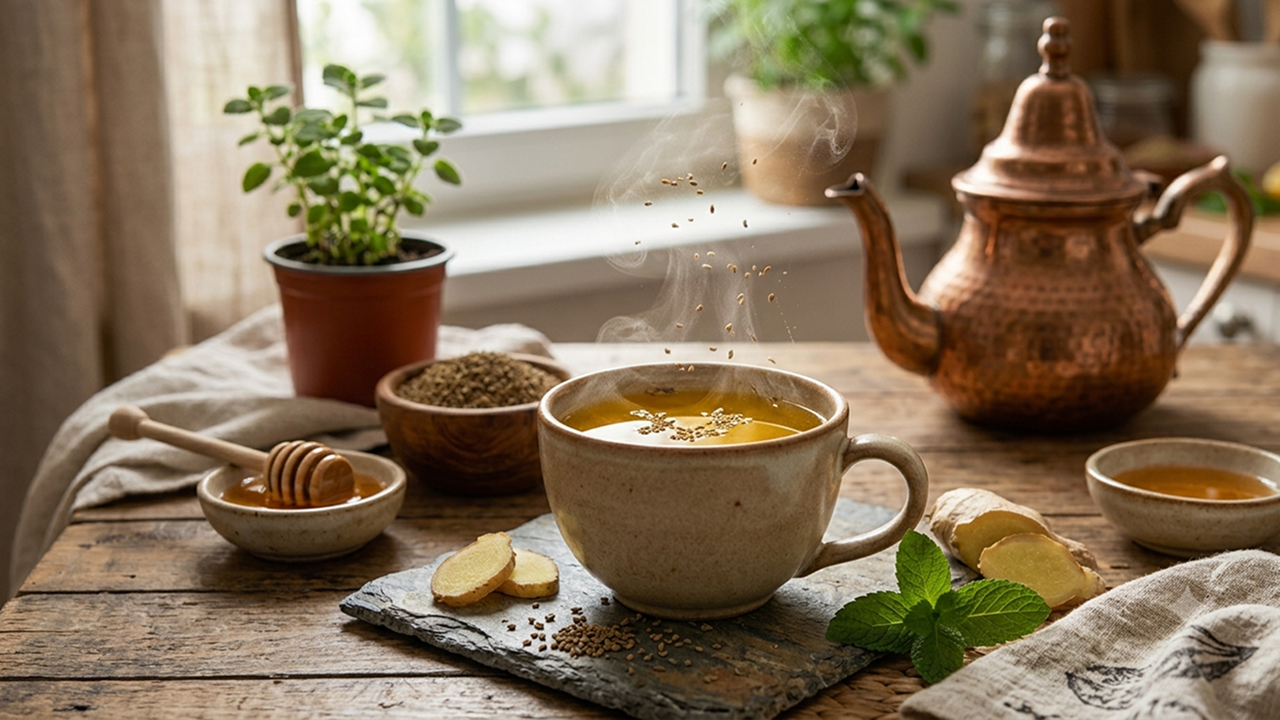
Ajwain tea is a type of herbal drink made from the ajwain seeds which are also known as carom seeds. These small oval-shaped seeds are derived from the plant Trachyspermum ammi and are widely used in cooking and as a traditional home remedy. Many people also enjoy ajwain as a detox tea because it is believed to support digestion and overall wellness.
Ajwain seeds have several naturally occurring compounds such as thymol, flavonoids, and essential oils that give them a unique flavor and potential health benefits. Ajwain tea does not contain caffeine which makes it an ideal drink to have throughout the day.
Nutritional Value of Ajwain Tea
While ajwain tea is low in calories, the plant substances that come from the brewing process are considered to be useful.
Some of the essential nutrients and components of ajwain tea:
- Thymol
- Flavonoids
- Essential oil
- Antioxidants
- Dietary minerals in small amount
- Phenolic compound
The exact nutritional value of ajwain depends on the amount of seeds used and the brewing time.
Top Health Benefits of Ajwain Tea
Supports Digestive Health
One of the most well-known ajwain tea benefits is its ability to support healthy digestion. The compound thymol found in it plays a role in stimulating the secretion of enzymes that are important for the digestion process. It’s common to drink ajwain tea after one eats a meal in order to assist with the digestion of food and reduce any feeling of fullness that one might experience.
May Help Relieve Bloating and Gas
Another reason why people drink ajwain tea is to reduce the feeling of bloating and gas. Ajwain tea has carminative properties that allow it to assist the body to relax and reduce gas.
Can Aid Weight Management
Drinking ajwain tea on its own won’t make you lose any weight. However, it can assist in the process of weight management if taken together with diet and workouts.
May Boost Metabolism
Research seems to suggest that ajwain contains certain components that are good for metabolism, making this one of the potential ajwain tea benefits being explored.
Supports Respiratory Health
Ajwain has been used traditionally for calming the respiratory system. Warm ajwain tea is said to provide relief from respiratory symptoms especially when combined with steam treatment.
May Help Strengthen Immunity
Ajwain contains antioxidant substances that aid in the protection of cells from free radical damage. The intake of foods that are high in antioxidants leads to better functioning of the immune system and overall well-being.
Rich in Antioxidants
The antioxidant properties found in ajwain help in the neutralization of free radicals, leading to reduced oxidative destruction of cells. Adequate amounts of foods that are rich in antioxidants in a person’s diet are conducive to good health.
May Help Reduce Inflammation
Studies have shown some of the natural components of ajwain have anti-inflammatory properties. Although more research needs to be conducted in order to prove its effects, decreasing chronic inflammation is very important in regards to one’s health.
Supports Heart Health
Ajwain tea might benefit heart health when it is taken in combination with a healthy lifestyle. Research indicates that ajwain contains antioxidants that may protect the blood vessels from oxidation.
May Help Regulate Blood Sugar Levels
Some studies show that ajwain can affect glucose metabolism, but strong clinical trials have to be carried out to make ajwain tea a go-to option in blood sugar management.
How to Make Ajwain Tea
Making ajwain tea is an easy task that requires only few ingredients. The tea is best attempted when freshly brewed.
Ingredients:
- 1 tablespoon ajwain (carom) seeds
- 2 cups of water
- Honey or lemon (optional)
Method:
- In a saucepan, bring water to a boil.
- Now add ajwain seeds in boiling water.
- Reduce the heat and simmer the mixture for 5 to 7 minutes.
- Strain the tea in a cup.
- If you wish, you can add honey or lemon juice and serve.
Tip: If you are drinking ajwain tea as part of a healthy regimen, do not add too much sweetening agent.
Best Time to Drink Ajwain Tea
The best time to drink ajwain tea varies according to your health objectives.
- Morning ajwain tea: Drinking it may aid in digestion and hydration.
- Ajwain tea post-meals: It is often used to provide relief from abdominal swelling and help in digestion.
- In cold weather: A warm drink of ajwain tea helps ease the throat and respiratory system if required.
- Evening ajwain tea: Being naturally free from caffeine, it can be sipped by those who do not suffer from any digestive problems.
For normal healthy adults, drinking kava tea 1-2 times a day is acceptable.
How Much Ajwain Tea Should You Drink?
Drinking herbal teas in moderation is important. The average amount of herbal tea is 1-2 cups daily and can be a part of a wholesome diet. For those who are new to ajwain tea, start with a little to see how the body reacts. It’s advisable not to consume excess ajwain, as it may lead to gut issues in some individuals.
Potential Side Effects of Ajwain Tea

Ajwain tea is typically safe to consume in moderation. However, excessive amounts are likely to cause side effects.
These effects may include:
- Heartburn or stomach irritation
- Nausea in sensitive people
- Increased acidity in the stomach
- Allergy in some rare instances
- Interactions with certain medications used
If you notice any discomfort after consuming ajwain tea, stop and consult your doctor.
Who Should Avoid Ajwain Tea?
Ajwain tea is a safe product for the majority of people but there are some people who need to be careful taking it.The people that should refrain from taking ajwain tea include:
- Pregnant women unless they have previously consulted their doctor
- Allergic people with known allergies to ajwain and other spices
- People that take medications that may have reactions with ajwain tea
- Individuals with long-term digestive issues that have been advised to stay away from strong spices
If you have any medical conditions or taking prescribed medication, it’s best to consult your physician before including ajwain tea in your daily life.
Ajwain Tea vs Jeera Tea
| Feature | Ajwain Tea | Jeera Tea |
| Main Ingredient | Ajwain (carom) seeds | Cumin seeds |
| Flavor | Strong, spicy, slightly bitter | Mild, earthy, nutty |
| Caffeine | Caffeine-free | Caffeine-free |
| Primary Traditional Use | Digestive support and bloating relief | Digestion and hydration |
| Antioxidants | Contains thymol and phenolic compounds | Contains cumin antioxidants |
| Best Time to Drink | Morning or after meals | Morning or throughout the day |
Both herbal teas can be part of a healthy diet. The better choice depends on your taste preferences and wellness goals.
Frequently Asked Questions
Certainly, ajwain tea can be consumed daily by adults who generally are fit and healthy. One to two cups in a day is enough.
Ajwain tea alone is not an effective weight-loss beverage. It can be paired with a healthy diet and physical exercise to foster weight management.
In scientific terms, ajwain tea has no evidence that shows a specific effect on abdominal fat. For sustainable fat reduction, a person needs to eat in moderation, exercise regularly, and follow a healthy lifestyle.
Ajwain has been used for a long time as a drink supporting digestion and relieving gas.
Many people drink ajwain tea on an empty stomach in the morning; still, some prefer having it after meals due to their sensitive stomachs.
Pregnant women should consult their physician regarding the consumption of ajwain tea. It is best for them to consult an expert in herbal remedies due to a number of reasons.
No. Ajwain is free of caffeine content; hence, it is a great substitute for tea and coffee.
Final Thoughts
Ajwain tea benefits include supporting digestive health and overall wellness. Ajwain tea is an uncomplicated herbal drink that has been appreciated for centuries in traditional remedies for treating digestive health problems. It contains naturally occurring antioxidants and other beneficial compounds that may contribute to human wellness when consumed in moderation. Nevertheless, ongoing research continues to uncover its additional properties.